
Street Dude - Homeless Empire
SayGames LtdAdventure
4.64.57K Reviews
- Version
- 1.3.2
- Installs
- 5.00M
- Age Rating
- Everyone 10+
Screenshots
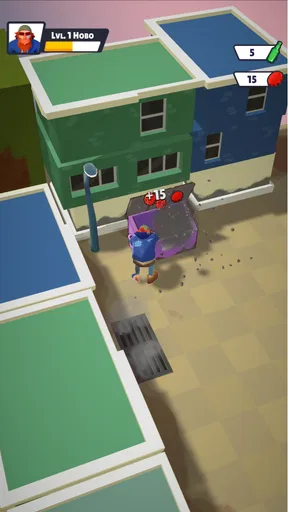
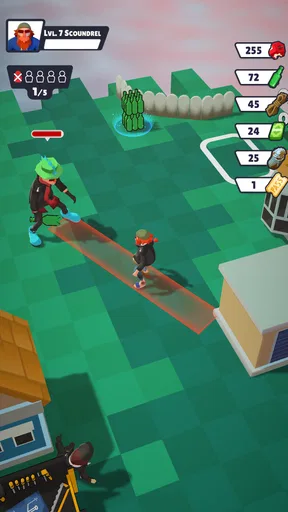
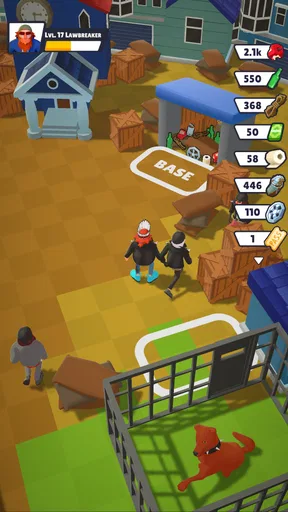

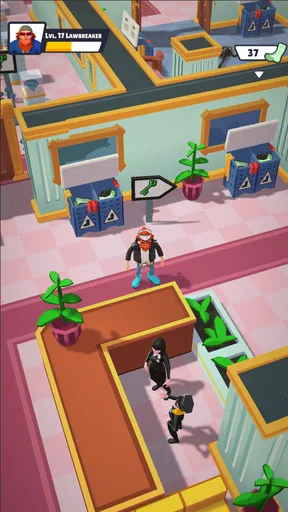
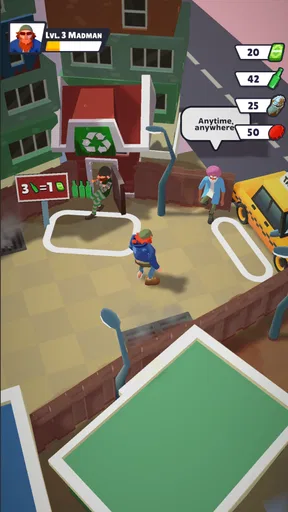
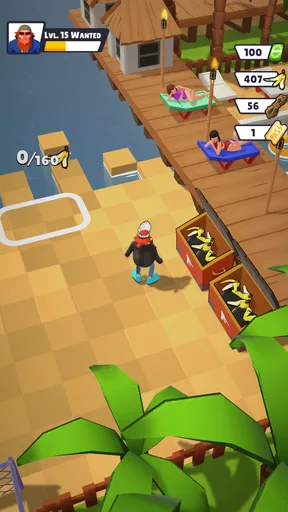
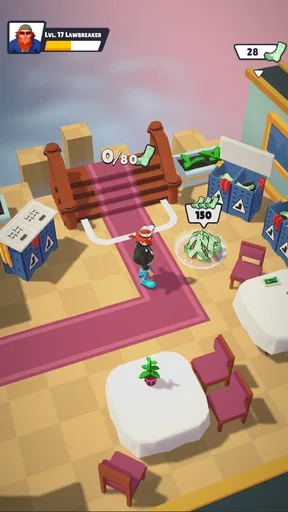
Our Review of Street Dude - Homeless Empire
 Analysis by Appyee
I approached Street Dude - Homeless Empire expecting a quick mobile adventure, and that is exactly where it makes the best first impression. It puts me in the role of a street urchin trying to build a better life, then turns that simple idea into a steady climb through short activities, upgrades, and repeatable decisions. The appeal is not a complicated story or a huge world. It is the satisfying feeling of starting with very little and gradually making each round more productive.
Developed by SayGames Ltd, this free adventure game is aimed at players aged Everyone 10+ and runs on Android devices using version 8.0 or later. It has reached over five million installs and holds a 4.6 average from around 102 thousand ratings, which fits my impression: this is an accessible game with a broad audience, but it still has enough progression to keep casual players checking back.
How the everyday gameplay loop feels
The basic workflow is easy to understand. I begin with limited resources, complete available activities, collect the results, and use those results to improve my position. The early stages are especially effective because every small gain feels visible. A modest upgrade can make the next attempt smoother, and that creates a natural reason to continue rather than stopping after one short session.
I found the game most enjoyable in small bursts. It works well when I have a few minutes while waiting for transport or taking a break. I can make progress without committing to a long story chapter, and the clear “start with nothing, improve step by step” structure means I do not need to remember a complicated plot between sessions.
The main strength of this loop is its clarity. Street Dude does not ask me to learn a large collection of systems before I can enjoy it. The goals are readable, the rewards are immediate enough to feel useful, and the progression gives ordinary actions a purpose. That makes it a comfortable recommendation for someone who wants a light mobile adventure game rather than a demanding role-playing experience.
There is also a useful rhythm to the way I play it. Instead of spending every reward immediately, I prefer to look at what will improve the next few actions. If an upgrade helps me earn more efficiently, it usually has greater value than a purchase that only feels attractive in the moment. This is a small habit, but it prevents the game from becoming a series of random taps.
What I check before spending resources
My first practical tip is to pause briefly whenever several improvements become available. The most expensive option is not automatically the best one. I compare the likely effect on my next run with the cost of delaying another upgrade. This matters because the game’s satisfaction comes from momentum: an improvement that pays back quickly can be more useful than a dramatic purchase that leaves me unable to develop anything else.
I also avoid treating every reward as a reason to push forward immediately. When the game presents a new opportunity, I first make sure I have collected what I already earned and understand what the next objective expects. That simple reset keeps the progression tidy and makes it easier to notice which action is actually helping.
For a realistic example, imagine playing during a short lunch break. I would complete the available tasks, collect the results, check whether a practical improvement is affordable, and stop after making one clear decision. That is better than rushing through several screens and spending everything without knowing why. Street Dude suits this kind of compact routine because its central loop is understandable even when played in brief sessions.
Settings and small choices worth checking
There are not many settings I need to manage, which is part of the game’s accessibility. I still recommend checking the available options when first installing it, especially before a longer session. I want the sound and notification behavior to match the situation: quiet when I am playing in public, and more active when I am at home and want the game to feel livelier.
I also pay attention to how the game presents optional purchases. Street Dude is free to download, while its in-app purchases range from $0.99 to $49.99 per item. That wide range makes it sensible to keep spending decisions deliberate. I can enjoy the basic progression without treating every offer as necessary, but younger players should have purchase controls handled carefully on the device.
This is one of the places where the game’s casual presentation can be misleading. Because the actions are simple, it is easy to tap through an offer without thinking. My approach is to regard paid options as optional convenience rather than part of the normal route. If I am enjoying the game, I would rather first see whether the regular progression remains satisfying before paying to accelerate it.
The current version is 1.3.2, and I would keep the installation updated through the normal app store process. That is not a gameplay trick, but it is a useful maintenance habit for any mobile title. It also helps avoid judging the experience from an outdated build when a newer version is available.
Faster patterns for making steady progress
Experienced play in Street Dude is less about frantic tapping and more about repeating a good sequence. I collect rewards, inspect the next useful improvement, choose the action that supports that improvement, and then repeat. This creates a simple priority system instead of leaving me to chase whichever button looks most exciting.
A second useful pattern is to separate progress goals from curiosity goals. Sometimes I want to see what a new area or option does, but that may not be the most efficient choice. When I am trying to advance, I focus on the activity that strengthens my earning loop. When I am simply relaxing, I allow myself to experiment. Keeping those two moods separate makes the game feel less frustrating.
I also recommend not judging a session by how many screens I have visited. The better measure is whether my next cycle became easier or more rewarding. A short session that creates a useful upgrade can be more valuable than a longer one filled with disconnected actions. This is particularly helpful for players who tend to feel that casual games require constant progress every time they open them.
Another practical habit is to stop when the next decision is unclear. The game is built for approachable play, but that does not mean every moment needs to be optimized. If I am no longer paying attention, continuing can lead to careless spending or repetitive play without enjoyment. Closing the game and returning later often works better than forcing another cycle.
Where the design works, and where it starts to show limits
The strongest part of the experience is the transformation fantasy. Beginning at the bottom and working toward a richer, more capable life gives ordinary upgrades emotional weight. Even when the mechanics remain simple, the theme provides a reason to care about the next improvement. That is more distinctive than a completely abstract collection of menus and numbers.
At the same time, players looking for deep exploration may find the structure too guided. This is not the right choice if I want a large open world, complex character builds, or a story that changes dramatically based on difficult decisions. The game’s pleasure comes from incremental improvement, not from solving intricate puzzles or mastering a competitive combat system.
Repetition is another genuine limitation. Once I understand the most useful progression pattern, some activities can feel familiar rather than surprising. That is acceptable for a short-session game, but it means I would not recommend it as someone’s only mobile game. I get more from it when I alternate it with a title offering a different pace or deeper challenge.
The free-to-play structure can also affect the feeling of momentum. Even when I am not buying anything, the presence of optional purchases may make the fastest route look more attractive than the patient route. My advice is to decide in advance whether I am playing for relaxation or acceleration. If I want a no-pressure experience, I should treat the purchase screen as something to evaluate, not an instruction.
Who will enjoy it most
Street Dude is a good fit for players who enjoy light progression, short tasks, and the satisfaction of turning small gains into visible improvement. It is especially approachable for someone new to mobile adventure games because the central idea is easy to grasp. The Everyone 10+ rating also places it comfortably among games suitable for a broad family audience, while adults can still appreciate its quick, uncomplicated sessions.
I would recommend it to a person who likes checking in during spare moments and prefers a clear goal over a complicated ruleset. It can also work for players who enjoy management-flavored progression but do not want a spreadsheet-like experience. The street-to-success theme gives the routine a little personality without requiring a large time investment.
I would skip it if I need a substantial narrative, demanding strategy, or a game that rewards precise skill above all else. Players who dislike repeated upgrade loops may also lose interest once the novelty of the theme fades. In those cases, a deeper adventure or a more mechanically varied alternative would be a better use of time.
How it compares with familiar alternatives
Compared with traditional adventure games, this one is much more focused on progression than exploration. There is less emphasis on wandering through a carefully authored world and more emphasis on improving the next cycle. Compared with management games, it feels lighter and more character-driven because the central fantasy is personal advancement rather than running a complex business.
That middle ground is its identity. It is more purposeful than a purely idle experience, but less demanding than a full strategy game. I can make meaningful choices about what to improve, yet I am not expected to memorize a large system of counters, maps, or character statistics. For me, that makes it a good “in between” game: something to play when I want more direction than a simple time-killer but less commitment than a major adventure.
The trade-off is depth. A specialist management game will probably offer more control, while a story-heavy adventure will deliver more emotional variety. Street Dude wins when convenience and immediate progression matter most. It loses when I want a world that keeps surprising me or a system that supports long-term experimentation.
My approach to mastering the progression
Mastery here means becoming consistent rather than discovering a secret combination. I keep a simple priority in mind: protect the actions that generate progress, choose improvements that support repeated play, and avoid spending just because I can. That approach makes the climb feel deliberate without turning a casual game into work.
I also use sessions for different purposes. In one session, I may focus on gathering enough resources for a practical upgrade. In another, I may simply explore the available activities and learn their rhythm. This prevents the game from feeling like a single endless chore and helps me decide whether I am still enjoying the loop or only following habit.
The best advanced insight is knowing where optimization stops being worthwhile. If improving one small part requires too much attention for too little enjoyment, I stop calculating and play casually. Street Dude is at its best when the progression supports relaxation. Trying to extract perfect efficiency from every action can make its friendly design feel unnecessarily demanding.
Because it is free, I can test that balance without an upfront cost. I would give the opening sessions enough time to reveal whether the upgrade cycle feels rewarding, while keeping the paid options in perspective. The game should remain enjoyable at its ordinary pace; spending should never be the only reason the next step feels appealing.
My final take on Street Dude - Homeless Empire
I came away viewing Street Dude as a polished, approachable adventure for players who like visible progress in compact sessions. Its strongest idea is simple but effective: start with almost nothing, make sensible choices, and watch the situation improve. SayGames Ltd keeps the presentation easy to follow, which helps the game work for casual players who do not want a long tutorial or a dense ruleset.
It is not a replacement for a deep adventure, a serious strategy game, or a richly branching story. The loop can become repetitive, and the optional purchase range means I would play with a clear spending boundary. Still, those limitations are easier to accept when I use it for what it does well: a quick, readable climb with enough decisions to make each short session feel purposeful.
My recommendation is straightforward. Try it if you enjoy upgrade-driven mobile games, short play windows, and the feeling of building a better position from a difficult starting point. Skip it if repetition or free-to-play offers quickly spoil your enjoyment. For the right player, the smartest way to play is patiently: improve the repeatable routine first, then chase the bigger rewards. That habit captures the game’s appeal without making it more complicated than it needs to be.
Verdict
Strengths of Street Dude - Homeless Empire
- Simple controls make the game easy to pick up and play.
- Short missions work well for quick gaming sessions.
- The humorous presentation keeps the theme lighthearted.
- Upgrades give a clear sense of progress over time.
- Runs well on many mid-range mobile devices.
Limitations of Street Dude - Homeless Empire
- Frequent ads can interrupt gameplay and slow down progress.
- Some upgrades may require considerable grinding to unlock.
- The gameplay can become repetitive after extended sessions.
- The homeless-themed humor may feel insensitive to some players.
- In-app purchases can make progression feel less balanced.
Other Releases by SayGames Ltd
View All
Turbo Stars - Rival Racing
Racing4.6

Johnny Trigger: Action Shooter
Action4.6

DOP 4: Draw One Part
Puzzle4.4

DOP: Draw One Part
Puzzle4.4
Similar Picks in This Category
View All
Roblox
Roblox Corporation4.2

Pokémon GO
Niantic, Inc.3.5

Ninja warrior: legend of adven
TOH Games4.6

Ninja Arashi
Black Panther4.6

Eyes - The Horror Game
Fearless Games sp. j.4.5

Critical Action:Gun Strike Ops
FPS Shooter & Action Game4.3
Frequently Asked Questions
What is Street Dude - Homeless Empire about?
Street Dude - Homeless Empire is a casual simulation game in which you begin with very little and try to survive and build a better life on the streets. You can explore the city, collect useful items, complete tasks, earn money, improve your character, and gradually expand your small operation. Its humor and exaggerated situations make the experience more lighthearted than a realistic homelessness simulator.
How does the gameplay work in Street Dude - Homeless Empire?
The game combines exploration, resource collection, simple missions, upgrades, and progression mechanics. You move around different areas, gather or obtain items, interact with characters, and use your earnings to unlock improvements. As your empire grows, new opportunities and challenges become available. The controls are generally easy to understand, making the game suitable for short sessions as well as longer periods of play.
Is Street Dude - Homeless Empire free to download and play?
Street Dude - Homeless Empire can generally be downloaded for free, but the experience may include advertisements and optional in-app purchases. These purchases can sometimes speed up progression, provide extra resources, or remove certain limitations. You do not necessarily need to spend money to advance, although players who prefer faster upgrades may encounter paid offers during gameplay.
Does Street Dude - Homeless Empire require an internet connection?
Some parts of Street Dude - Homeless Empire may work without a constant internet connection, which is useful when you want to play while traveling or without mobile data. However, advertisements, purchase verification, updates, cloud-related features, or certain online services may require access to the internet. Availability can also depend on the device, operating system, and current version of the game.
Is Street Dude - Homeless Empire suitable for children?
The game uses cartoon-style graphics and comedic presentation, but its subject matter includes homelessness, street survival, money-making, and interactions that may not be appropriate for every young player. Parents should check the age rating, advertising content, and in-app purchase settings before allowing children to play. Younger users may also need guidance because the game presents serious themes in an exaggerated, humorous way.
Play our best games!


